
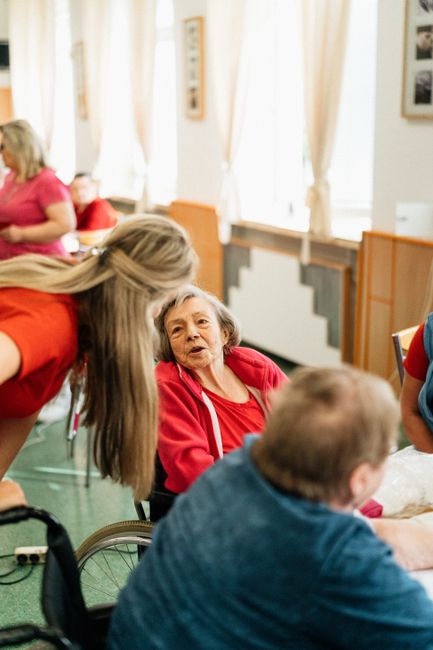
What does creativity look like in assisted living?
Creativity in assisted living is not limited to painting or formal art classes. It can include gardening, storytelling, music, cooking, decorating, writing, puzzles, photography, sewing, holiday traditions, and everyday problem-solving.
For older adults, creative activity is most useful when it reflects personal interests and abilities. A resident who never enjoyed drawing may become deeply engaged in arranging flowers, repairing small objects, listening to familiar music, or sharing family recipes. The goal is not artistic performance. The goal is meaningful participation, self-expression, and connection with other people.
Why does creative activity matter for older adults?
Creative activities can support emotional well-being, social connection, movement, communication, and a sense of identity. They give residents opportunities to make choices and contribute something personal to shared life in the community.
A person who has recently moved from a longtime home may be adjusting to a smaller living space, a new routine, and unfamiliar surroundings. Creative projects can help restore a sense of ownership. Displaying a resident’s quilt, photographs, holiday decorations, or written memories can make a room feel more personal.
Creative participation may also encourage conversation. A collage can lead to stories about family trips. A familiar song may prompt memories of dancing or community celebrations. A recipe-writing group may allow residents to teach one another rather than simply receive assistance.
These benefits do not require advanced skills. Activities should be adapted so residents can take part at different levels of ability.
Which activities work well in assisted living?
The most effective activities are flexible, familiar, and easy to join without pressure. Options may include:
- Watercolor painting, coloring, or simple sketching
- Collage-making with large, easy-to-handle materials
- Flower arranging or seasonal table decorations
- Knitting, crocheting, quilting, or no-sew fabric projects
- Singing, rhythm activities, or listening sessions followed by discussion
- Journaling, poetry, letter writing, or recording life stories
- Cooking demonstrations and family-recipe exchanges
- Container gardening and indoor plant care
- Photography, photo sorting, and memory-book projects
- Woodworking-style assembly projects using safe materials
- Seasonal crafts connected to winter, spring, summer, or autumn traditions
- Group storytelling based on photographs, objects, or local memories
Activities can be individual or shared. Some residents prefer quiet work at a table, while others enjoy performing, teaching, or collaborating. Offering both choices prevents creativity from becoming another scheduled obligation.
How can activities be adapted for changing abilities?
Activities should be adjusted to the person rather than expecting every resident to work in the same way. A resident with limited hand strength may be able to choose colors, direct another person, use larger tools, or work with pre-cut materials. Someone with vision changes may benefit from high-contrast supplies, strong lighting, large-print instructions, and materials with different textures.
For residents living with memory loss, familiar and repetitive activities often work better than complicated projects. Sorting buttons by color, folding fabric, arranging flowers, humming familiar songs, or decorating cookies can provide purposeful involvement without requiring a series of difficult instructions.
Helpful adaptations include:
- Breaking projects into one or two clear steps
- Demonstrating an activity instead of relying only on written directions
- Providing larger handles, lightweight tools, and non-slip surfaces
- Using high-contrast colors and uncluttered work areas
- Offering short sessions with rest breaks
- Allowing residents to observe before deciding whether to participate
- Avoiding correction when the finished project does not match an example
The finished item does not need to look perfect. Praise should focus on effort, choice, memories, and enjoyment rather than technical quality.
How can families support creativity after a move?
Families can help by bringing materials that have personal meaning and are safe to use. A small box of fabric pieces, copies of family photographs, recipe cards, postcards, costume jewelry, or recordings of favorite music may provide useful starting points.
It helps to ask open-ended questions instead of assuming what a resident will enjoy. Questions such as “What did you like making at home?” or “Which of these materials interests you?” give the older adult control.
Family members can also participate without taking over. Sorting photographs together, listening to music, decorating a seasonal item, or writing down a family story can become a shared activity. If a resident loses interest, becomes tired, or seems frustrated, stopping is appropriate. Creative time should remain voluntary.
Residents who live far from relatives may still share creativity through mailed drawings, handwritten notes, recorded stories, or photographs of completed projects. These exchanges can create continuity between the assisted living community and the family home.
What should assisted living communities consider in Fox Chapel?
Local seasonal conditions can shape creative programming. Cold weather and shorter winter daylight may make indoor activities especially useful, while warmer months may allow supervised gardening, outdoor sketching, or nature-based projects. Rain, snow, heat, and uneven outdoor surfaces should be considered when planning activities outside.
Housing patterns in the area may also affect what residents bring with them. Some older adults move from larger homes where they collected tools, craft supplies, photographs, books, or garden materials. A smaller residence may not have space for everything, so preserving a few meaningful items can be more helpful than trying to recreate an entire workshop.
Activities should also account for transportation, family visiting patterns, and the physical layout of the community. A well-planned program can include projects that take place in a common room, at a bedside table, or outdoors near an accessible entrance. Residents should not have to walk long distances or manage complicated equipment to participate.
How can staff tell whether an activity is truly meaningful?
Participation is only one measure. A resident may benefit from watching, discussing, choosing materials, or helping another person. Staff and families can look for signs such as increased conversation, relaxed body language, repeated requests to continue, improved willingness to join others, or pride in showing completed work.
A popular activity may not be meaningful for every resident. Attendance numbers alone can be misleading. Someone who attends a music group but remains uncomfortable may need a quieter option. Another resident who rarely joins group activities may become engaged when offered one-to-one storytelling or a familiar household task.
Good programming changes over time. Residents’ interests, strength, hearing, vision, memory, and energy levels may change. Activities should be reviewed regularly rather than treated as permanent routines.
Can creativity support dignity and independence?
Yes. Creative activities provide natural opportunities for residents to make decisions, teach others, and contribute to the community. A resident may select the colors for a display, lead a song, explain a recipe, arrange a table, or share knowledge about gardening.
These roles are valuable because they recognize the person’s experience rather than focusing only on care needs. Even a small choice—such as selecting music or deciding where to place a decoration—can reinforce independence.
The strongest creative programs do not treat older adults as passive recipients of entertainment. They treat residents as artists, storytellers, mentors, organizers, listeners, and community members whose preferences continue to matter.
